-
The Most Expensive Phrase in Auto Repair Is 'I'll Deal With It Later'
-
Argument 1: The Bill You Think You're Avoiding Is Always Smaller Than the One You Actually Get
-
Argument 2: Cheap Parts Are the Most Expensive Thing You Can Buy
-
Argument 3: The Cheapest Parts to Replace Are the Ones People Ignore Most
-
But Can You Actually Afford Preventative Maintenance?
The Most Expensive Phrase in Auto Repair Is 'I'll Deal With It Later'
I manage parts procurement for a small fleet—about 30 vehicles, mix of trucks and SUVs. Over the past three years, I've made almost every mistake you can make when buying automotive components. I've ignored transmission warning signs. I've bought cheap clutch kits that failed prematurely. I've gone 100,000 miles on original spark plugs because I genuinely didn't understand what they do.
Each time, I paid more than if I'd just done the maintenance on schedule.
I started tracking every repair cost in a spreadsheet back in 2022. Planned replacements average $180. Emergency repairs? $890. That's not a typo—it's a 4.8x difference. And that doesn't account for the hidden costs: rental vehicles, lost productivity, the stress of a driver stranded on the highway.
Well, almost every mistake. The one I haven't made is forgetting the lesson twice.
Argument 1: The Bill You Think You're Avoiding Is Always Smaller Than the One You Actually Get
September 2022. Our 2012 Ram 3500 with the Aisin transmission started shifting hard. Not every time—just occasionally, usually on cold mornings. A driver mentioned it. I noticed it myself once or twice. I filed it under "monitor" and moved on.
Three months later, it failed completely. Stuck in second gear on I-35, 40 miles from our shop.
The total damage: $2,800 for the rebuild. $400 for a rental. $300 in lost productivity while the truck sat waiting for parts. A very uncomfortable conversation with ownership.
What would the warning-sign repair have cost? A fluid and filter change. Maybe $200. Perhaps a solenoid pack if we'd caught it early enough—another $350. Total: $550.
Same pattern with a Toyota Tundra in our fleet. Faint whine from the rear differential. Everyone told me differentials whine—it's normal. It wasn't. A $150 fluid change turned into a $1,500 rebuild.
Here's what I've learned: "monitor" is just another word for "hope it doesn't get worse." And it always gets worse.
Argument 2: Cheap Parts Are the Most Expensive Thing You Can Buy
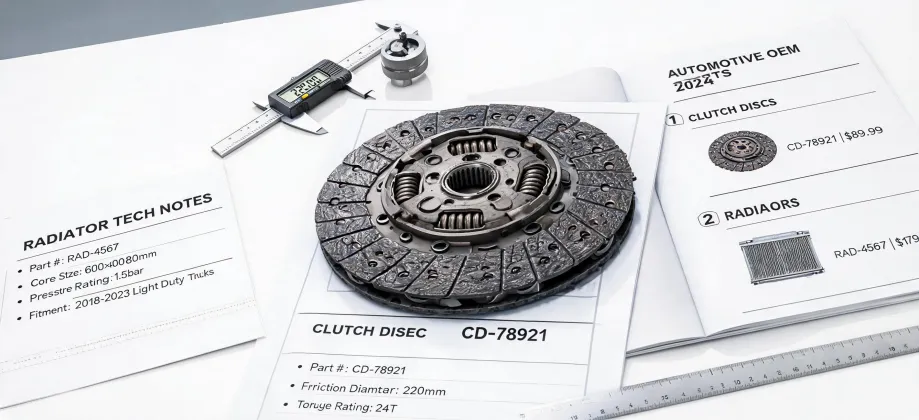
After the transmission fiasco, I overcorrected. When a clutch went out on one of our work trucks, I found an Aisin clutch kit online for about $150 less than the OEM version. Same brand. How different could it be?
Very different.
That budget kit lasted 14 months. The OEM kit we installed after it is going on three years now. When I did the math—including the labor to replace it twice—the "cheap" option cost about $600 more in total.
Look, I'm not saying you should always buy the most expensive option. But I've learned that "same brand, lower price" often means "same brand, lower spec." For critical drivetrain components, the price difference rarely justifies the risk. Aisin makes good transmissions. But they make them in different grades, and the cheap clutch kit is not the same as the OEM one.
The Aisin clutch kit price difference—$150 upfront—sounds significant until you're paying it twice.
Argument 3: The Cheapest Parts to Replace Are the Ones People Ignore Most
This is the one that embarrasses me. In 2023, I had a Honda CR-V in the fleet with a clicking noise when turning. Classic wheel bearing symptom. I ignored it because I thought wheel bearings were a "when it gets bad, deal with it" item. The bearing eventually seized. It took the hub and ABS sensor with it. A $120 part became a $600 repair.
And then there's spark plugs—the component I completely misunderstood for years. I went over 100,000 miles on original plugs because I didn't know what they did.
So, what does the spark plug do? It ignites the fuel-air mixture in your engine. When plugs wear out, fuel doesn't burn completely. You get misfires, reduced fuel economy, and eventually ignition coil failure. A set of four spark plugs costs around $40. An ignition coil replacement runs $300 to $600 depending on the vehicle.
Forty dollars versus six hundred. The math isn't complicated.
But Can You Actually Afford Preventative Maintenance?
I can hear the objection. Not everyone has the budget to replace parts before they fail. And it's a fair point—$200 here, $400 there adds up.
But here's my counter: emergency repairs don't negotiate. They don't care about your budget. They arrive at the worst possible moment and demand immediate payment. Planned maintenance, at least, you can schedule. You can budget for it. You can compare prices when you're not desperate.
The parts I now check on a fixed schedule:
- Transmission fluid condition and shifting behavior—every oil change
- Differential noises—any whine gets investigated immediately, no exceptions
- Wheel bearing symptoms—clicking, humming, uneven tire wear
- Spark plug replacement intervals—checking the manual, not my memory
None of this is complicated. It's just boring, consistent attention to things that don't seem urgent—until they are.
My spreadsheet now tracks planned versus emergency repairs across every vehicle in our fleet. The pattern holds every single time. Planned replacements: $180 average. Emergency repairs: $890 average. The cheapest repair is always the one you do before something breaks.
I learned this the expensive way. Four thousand two hundred dollars and counting. You don't have to.